



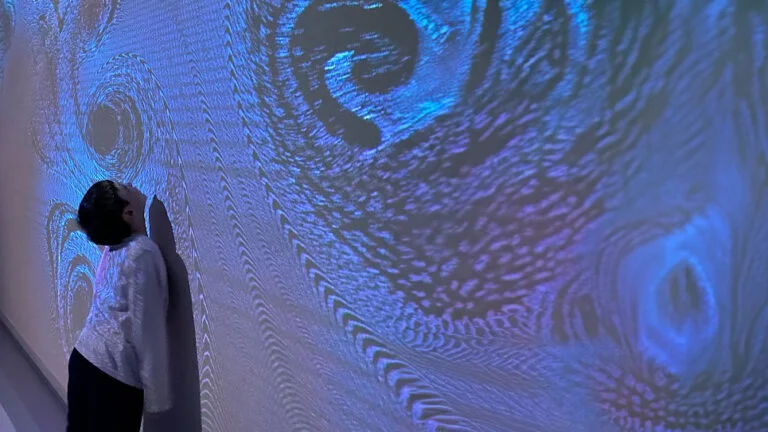
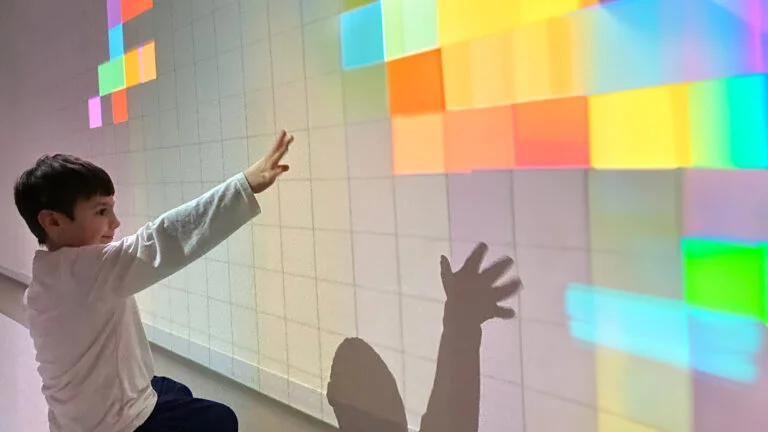
SENSEi ART turns one or more rooms into an immersive, interactive space: images on walls and floor, sounds, lights and objects respond to visitors’ movements. Artworks are not just looked at: they are explored, walked through, listened to, lived.
Everything is mounted on the ceiling, so the room stays free and can be rearranged in no time. It works without internet and content is selected from a tablet, exhibition after exhibition.
Ramps and lifts matter, but they are not enough. Crowded rooms, long texts and unspoken rules can make a visit hard, especially for people with an intellectual disability or on the autism spectrum.
With SENSEi ART you can:
SENSEi grows out of more than ten years of research on interactive multisensory environments, started at Politecnico di Milano with the Magic Room and carried on today with SUPSI. Two studies focus on museums: immersive social stories to prepare the visit and XOOM, a tool for creating 360° virtual exhibition tours without coding.
Cultural accessibility is a priority for many foundations and public programmes. In the UK, Arts Council England supports cultural projects through National Lottery Project Grants, and the National Lottery Heritage Fund backs inclusion in heritage sites. Across Europe, foundations and EU programmes fund accessibility and co-design projects. We help you read the call and prepare the technical part of the project. Find out how to fund an accessible museum.
Do I need a dedicated room? No. Even a small room works: SENSEi goes from 3×3 metre rooms to 10 metre walls, all mounted on the ceiling.
Who creates the content? We start from the museum’s artworks and themes and turn them into interactive scenes, together with curators and museum educators.
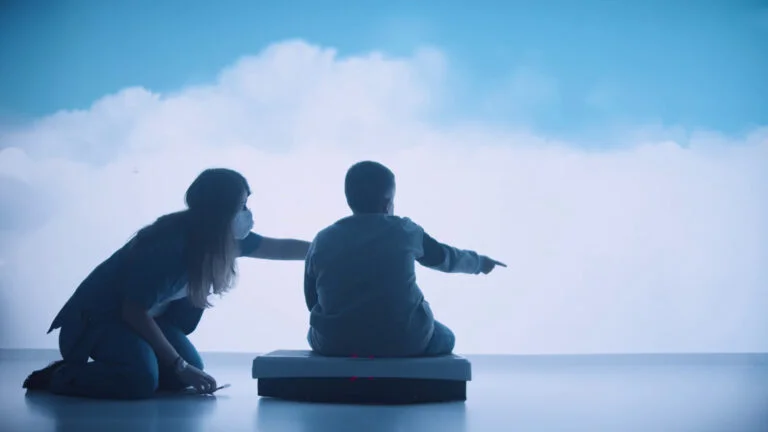
Is it suitable for autistic visitors? Yes: stimuli are adjusted in real time and low-stimulation routes can be prepared.
Does it work without internet? Yes, the system runs locally. Internet is only needed for updates and remote support.
 Immersive installation for temporary exhibitions: how to design itHow to design an immersive, interactive installation for a temporary exhibition: story, space, content, accessibility and reusing the room show after show.
 Quiet hour at the museum: how to run low-stimulation visitsWhat a museum quiet hour or relaxed opening is and how to run one: softer light and sound, social stories, sensory maps…
 Accessible museum: how to fund an immersive experienceFoundations, lottery funds and European programmes: the main routes to fund an immersive, interactive installation that makes your museum accessible to everyone.
 How to fund a multisensory room in Europe: a country guideRegional calls, PNRR and local resources to fund a multisensory classroom: a table of funds, a checklist for reading a call and…
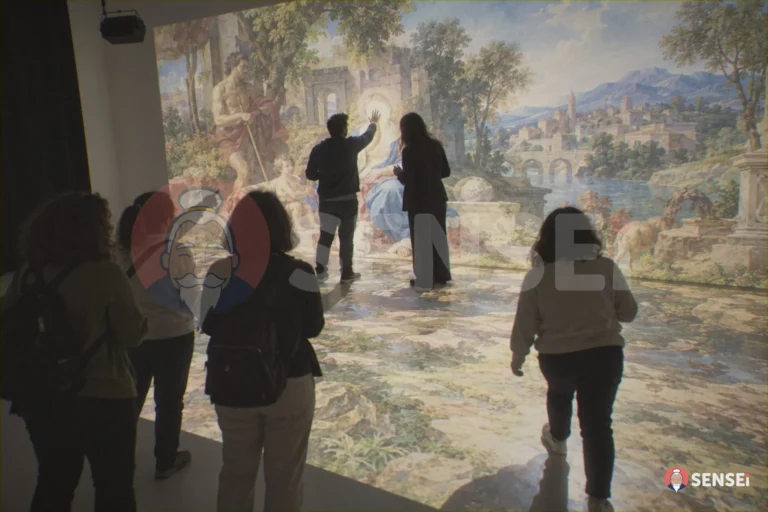 INCLUDE-ID: inclusive museums through co-design and AIThe European project INCLUDE-ID combines co-design, artificial intelligence and multisensory experiences for museums open to people with intellectual disability.
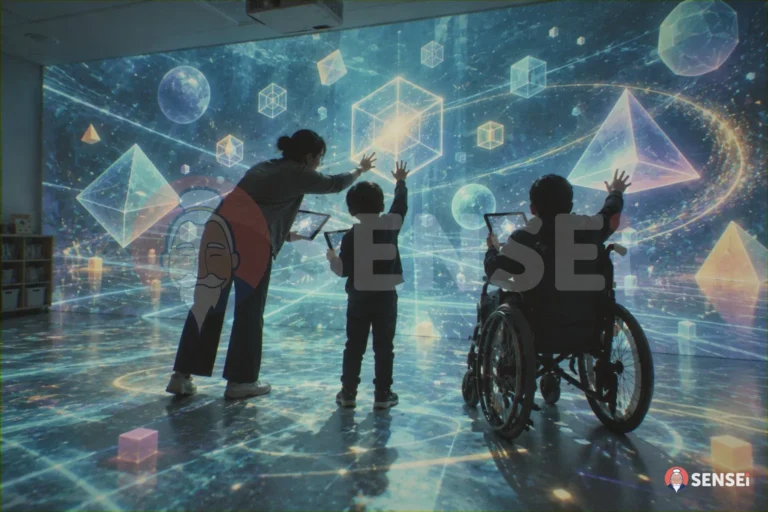 Inclusive augmented reality: designing the future with everyoneAt CHI, an international group of researchers, including Mirko Gelsomini, brings the community together around one question: how do we design augmented…